The History & Evolution of Plantation Shutters
Updated: May 12
Although the term “plantation” conjures up an image of massive estates and grand homes from America’s antebellum period, the term is somewhat misleading, from a historical perspective.
Plantation shutters have a rich history. They are more than just functional pieces of "window furniture". They have been used for centuries to manage light and ventilation in homes. They have a fascinating story that dates back thousands of years.
Plantation shutters have been around since ancient times…
But Just How Did They Come To Be?
The history of shutters goes way back in time. What were they used for? How did they develop? Where did they originate from? Let's look at how they developed over time, and why they have become so popular. Finally, let's look at the different types of shutters that are available today, and the benefits of each one.
Louvered shutters date back to ancient Greece, when they were crafted from granite or marble.
They were designed to:
Block / diminish the hot Mediterranean sun
Allow indirect light and cooling breezes to enter
Maintain privacy
The First Shutters Came Before Glass Windows
Many people associate plantation shutters with the American South, where they are commonly found in historical homes. Although their use became widespread here, the shutter styles that are popular today actually originated in Greece.
Before the advent of shutters, animal hides were used as window coverings. Back then, windows were just an opening in the wall. People needed a way to control light and air flow that provided both comfort and protection. Crude curtains were available, but cloth didn’t provide protection from storms.
When they were first invented, shutters were made of marble or granite. This allowed them to provide comfort since cooling breezes could pass through the louvers while also providing safety and protection from rain and tropical storms thanks to the durability of the materials.
As the popularity of shutters grew, so did their use around the Mediterranean. Over the years, their form and materials changed, allowing for enhanced control of both light and ventilation.
Medieval Times
During Medieval times, shutters were valued thanks to the security and protection they provided from intruders.
Most windows in Europe were rectangular. They were wider than they were tall. Shutters were made with iron or wooden reinforcements to provide greater protection from outside forces. If louvers were used, the louvers were angled in order to prevent rain from entering and the position of the louvers could not be adjusted. They were most often permanently attached to the building.
Examples of this design can be found in Guildford castle in London which was built around 1245. Many other notable buildings in England during this period had individually decorated shutters that included hand-painted coats-of-arms.

Tudor Era
During the Tudor period in England (Henry VIII and Elizabeth I) shutters were very popular. They were typically made of wood. The availability of hinges (hand-forged by blacksmiths) made them much easier to open and close.
The basic design which evolved during this period has changed little over the centuries. Wood had replaced heavier and more costly stone. Using wood reduced cost, making them accessible to more people. Using wood also allowed for greater adjustability of the louvers.
Glass windows were introduced in the Tudor era but most people could only afford to add glass to the top half of their windows, leaving the bottom half open. The shutters that were used on these windows became the first example of “cafe” style shutters.
These shutters were typically solid wood. They were opened by folding the panels against the interior or exterior wall to let in air and light. They often featured ornate millwork or painted decoration. For security, an iron or wooden "bar" was placed across the panels to "lock" them when they were closed.

17th Century
In17th century Europe the use of glass windows became more mainstream. Windows began to look like those we use today; having glass in both the bottom and the top. It was at this time that shutters became a “must-have” home feature among the rich
Shutters at this time were something of a hybrid. They borrowed both from ancient Greek and Tudor/Elizabethan design. They covered the full height of the window opening and louvered slats became more common.
Improved slats provided greater control of both light and air flow. Light could be controlled to allow for everything from complete darkness to full light. Improved air flow helped to retain heat in Winter and to allow cooling breezes to enter in Summer.

Louis XIV
When King Louis XIV of France insisted that shutters be added to his palace at Louvre, they took on an element of social importance. In order to "keep up", other royals simply "had to have them".
One theory suggests King Louis used the movable louvers to admire women without being seen. It is believed he installed louvered shutters around the court gardens so he could peek at women while they were bathing and also to keep his guards from being distracted by them.
Regardless, this period elevated shutters to symbols of status and power. Visually, they were similar to what we would recognize as plantation-style shutters today. Rather than a necessity to protect against weather or intruders, they were both an aesthetic and a functional choice. Cooks could control air-flow in their kitchens. Homeowners could rest in a combination of darkness, security and comfort.
The word ‘louvre’ (or louver as we know it in America) came from the Louvre Palace, which was the traditional royal residence in France until Louis XIV relocated it to Versailles in 1682.
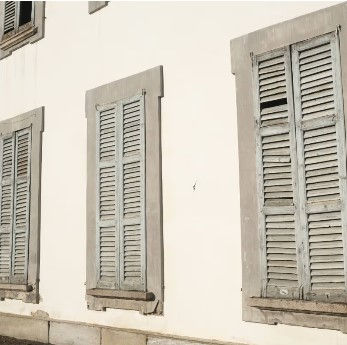
The 18th Century
Shutters came to the New World in the 18th Century. They were brought by Spanish, French and British colonists. They became particularly popular in warmer climates where protection from sun and heat was critical. In the southern United States, they were often called "Colonial Shutters".
Eventually, laminate materials evolved as an alternative to solid wood. Laminates offered greater resistance to moisture and extreme heat at lower cost.

The Industrial Era
With the advent of the Industrial Revolution came the introduction of more sophisticated features, largely due to the mechanization of woodworking.
This brought a higher level of sophistication and even more features. Louvers and frames became both stronger and more narrow. Instead of simply blocking out light and heat, they provided for improved air-flow while maintaining protection from the elements. For the first time, the amount of visibility allowed by the shutter could be taken into consideration.

Today
Shutters have evolved a lot over the years. They are in use around the world. They have become “must-have” items in the US, Europe, and Mediterranean countries and even Northern European countries like Norway, Belgium & Holland!
Polymer shutters were introduced in the 1990s. Polymer material provides a more cost-effective and environmentally stable alternative while maintaining most of the look and feel of solid wood.
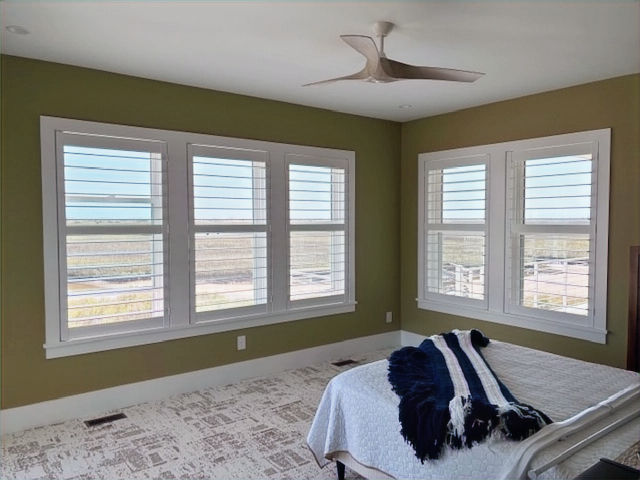
Plantation shutters are just as useful today as they were many years ago. They still filter light, provide ventilation, give protection against the elements and help to regulate temperature. Today, they're valued more than ever for their appearance as well.
They can enhance the minimalist aesthetic of a modern home or lend beauty and authenticity to a more traditional setting.

What makes shutters so popular?
Complements all home decor styles
Energy efficient
Simple and easy to use
Privacy
Light Control
Air-Flow Control
Easy to Clean
Increased Home Value
Throughout their evolution, custom shutters have proven to be one of the most adaptable and practical types of window covering. Modern shutters are a result of hundreds of years of refinement. No other window covering can offers the same degree of flexibility in regulating light, temperature, privacy and security.
If you’re in Brunswick County, NC, we’re here to help you find the perfect solution for your space.
📞 910-712-6695


Comments